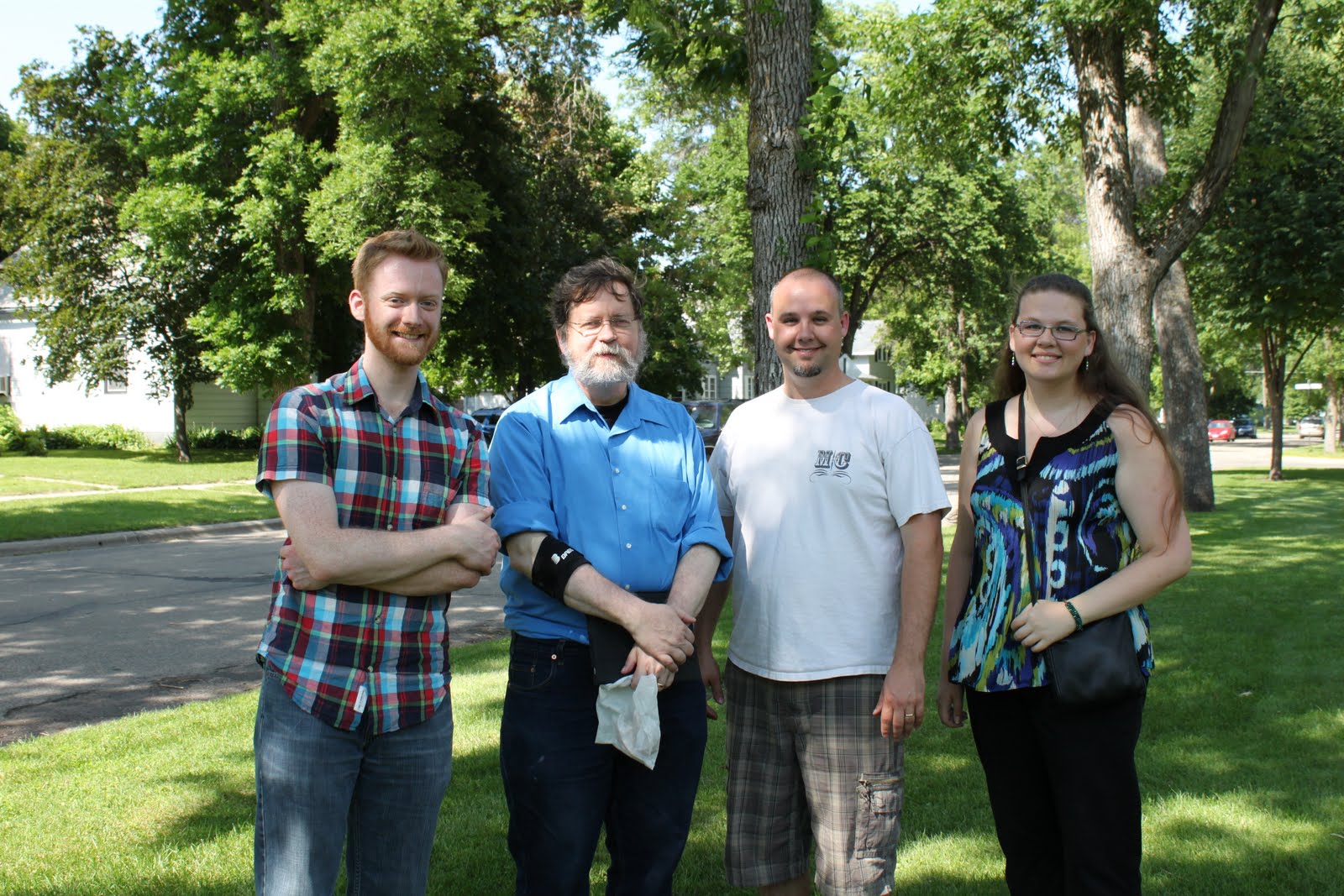
In this episode of Life, the Universe & Everything Else, Greg Christensen, Ian Macaulay, and Gem Newman discuss whether the character of Jesus Christ as portrayed in the Christian Bible is actually based on an historical figure, and Greg gives us a review of Bill O'Reilly's new book along the way.
Life, the Universe & Everything Else is a program promoting secular humanism and scientific skepticism presented by the Winnipeg Skeptics and the Humanists, Atheists & Agnostics of Manitoba.
Links: Historicity of Jesus (Wikipedia) | Christ myth theory (Wikipedia) | Carrier and Ehrman disagree on the historicity of Jesus | David Fitzgerald responds to criticism of Nailed | LUEE Episode 72: The War on Christmas (A Brief History) | Irreligiosophy: The One True Podcast (Website, iTunes) | The Bible Geek Show (Website, iTunes) | Josephus on Jesus | Tacitus on Christ | Criterion of Embarrassment | Acharya S (Wikipedia)
Books: Killing Jesus, by Bill O'Reilly and Martin Dugard | Nailed, by David Fitzgerald | Proving History, by Richard Carrier | The Incredible Shrinking Son of Man, by Robert Price | Did Jesus Exist?: The Historical Argument for Jesus of Nazareth, by Bart Ehrman
Contact Us: Facebook | Twitter | Email
Listen: Direct Link | iTunes | Stitcher | RSS Feed
Showing posts with label agnosticism. Show all posts
28 April 2014
20 October 2013
LUEE Episode 68: Atheist Myths
Episode 68: Atheist Myths
Is atheism a religion? In this episode of Life, the Universe & Everything Else, Donna Harris, Greg Christensen, Pat Morrow, and Jeffrey Olsson take on a few of the myths and misconceptions about atheists.
Life, the Universe & Everything Else is a program promoting secular humanism and scientific skepticism presented by the Winnipeg Skeptics and the Humanists, Atheists & Agnostics of Manitoba.
Links: Atheist vs. Agnostic | Atheism starts its megachurch: Is it a religion now? | Calgary Secular Church | Michael Enright: Could Atheists please stop complaining? | Elizabeth Renzetti: Heavens, we atheists have become a smug, dreary lot | Betty Bowers Explains Traditional Marriage to Everyone Else
Contact Us: Facebook | Twitter | Email
Listen: Direct Link | iTunes | RSS Feed
Is atheism a religion? In this episode of Life, the Universe & Everything Else, Donna Harris, Greg Christensen, Pat Morrow, and Jeffrey Olsson take on a few of the myths and misconceptions about atheists.
Life, the Universe & Everything Else is a program promoting secular humanism and scientific skepticism presented by the Winnipeg Skeptics and the Humanists, Atheists & Agnostics of Manitoba.
Links: Atheist vs. Agnostic | Atheism starts its megachurch: Is it a religion now? | Calgary Secular Church | Michael Enright: Could Atheists please stop complaining? | Elizabeth Renzetti: Heavens, we atheists have become a smug, dreary lot | Betty Bowers Explains Traditional Marriage to Everyone Else
Contact Us: Facebook | Twitter | Email
Listen: Direct Link | iTunes | RSS Feed
29 July 2012
LUEE Episode 27: The Benefits of Religion
Episode 27: The Benefits of Religion
In this episode of Life, the Universe & Everything Else, Leslie Saunders discusses the purported benefits of religion with Greg Christensen and Robert Shindler.
Life, the Universe & Everything Else is a program promoting secular humanism and scientific skepticism presented by the Winnipeg Skeptics and the Humanists, Atheists & Agnostics of Manitoba.
Links: Drinking Skeptically | Microsoft Adds "Big Boobs" to Linux Kernel | 10 Benefits of Religion | Will the Earth Survive the Sun's Death? (National Geographic News, New Scientist) | The Nonbelievers' Beliefs | The Book of Genesis, Illustrated by Robert Crumb | Unwin Formula
Also on this episode, the third instalment of Where's My Jetpack? This week Old Man Newman asks, "Where's my cure for cancer?"
Where’s My Jetpack? Links: Cancer Fact Sheets (World Health Organization, National Cancer Institue) | Cancer Statistics | Dichloroacetate (Dr. Steven Novella, Orac) | Genetically Modified T Cell Therapy | Thioridazine Cancer Treatment
Contact Us: Facebook | Twitter | Email
Listen: Direct Link | iTunes | RSS Feed
In this episode of Life, the Universe & Everything Else, Leslie Saunders discusses the purported benefits of religion with Greg Christensen and Robert Shindler.
Life, the Universe & Everything Else is a program promoting secular humanism and scientific skepticism presented by the Winnipeg Skeptics and the Humanists, Atheists & Agnostics of Manitoba.
Links: Drinking Skeptically | Microsoft Adds "Big Boobs" to Linux Kernel | 10 Benefits of Religion | Will the Earth Survive the Sun's Death? (National Geographic News, New Scientist) | The Nonbelievers' Beliefs | The Book of Genesis, Illustrated by Robert Crumb | Unwin Formula
Also on this episode, the third instalment of Where's My Jetpack? This week Old Man Newman asks, "Where's my cure for cancer?"
Where’s My Jetpack? Links: Cancer Fact Sheets (World Health Organization, National Cancer Institue) | Cancer Statistics | Dichloroacetate (Dr. Steven Novella, Orac) | Genetically Modified T Cell Therapy | Thioridazine Cancer Treatment
Contact Us: Facebook | Twitter | Email
Listen: Direct Link | iTunes | RSS Feed
11 March 2012
LUEE Episode 17: Leaving Faith Behind, Part 2
Episode 17: Leaving Faith Behind, Part 2
In this episode of Life, the Universe & Everything Else, host Jeffrey Olsson continues his discussion with Ali Ashtari (a former Shia Muslim), Scott Carnegie (a former Mormon), and Greg Christensen (who dabbled in Christianity), talking about how leaving their faiths behind has changed their lives for the better.
Life, the Universe & Everything Else is a program promoting secular humanism and scientific skepticism presented by the Winnipeg Skeptics and the Humanists, Atheists & Agnostics of Manitoba.
Links: Third Annual Cross Canada Skeptical Smackdown | Quebec Kids Cannot Opt Out of Religion Course (Redux) | Expelled Exposed | NOVA | Neil deGrasse Tyson | The Atheist Experience | Timetree | Shia Islam | Anglicanism | Mormonism | Leaving Faith Behind (Blog, Book)
Also on this episode, the second instalment of Where's My Jetpack? This week Old Man Newman asks, "Where's my pet dinosaur?"
Where's My Jetpack? Links: Jack Horner: How to Hatch a Dinosaur (Wired, TED Talk, The Skeptics' Guide to the Universe) | Woolly Mammoth to be Cloned (Discovery News, BBC, Discoblog) | Dinosaur Taxonomy
Programming Note: In the coming weeks we will start releasing an episode every second Sunday. We are making the switch to a bi-weekly release model to allow our team more time to research topics and edit podcasts. This will ultimately serve to provide you, our listeners, with a higher quality listening experience!
Contact Us: Facebook | Twitter | Email
Listen: Direct Link | iTunes | RSS Feed
In this episode of Life, the Universe & Everything Else, host Jeffrey Olsson continues his discussion with Ali Ashtari (a former Shia Muslim), Scott Carnegie (a former Mormon), and Greg Christensen (who dabbled in Christianity), talking about how leaving their faiths behind has changed their lives for the better.
Life, the Universe & Everything Else is a program promoting secular humanism and scientific skepticism presented by the Winnipeg Skeptics and the Humanists, Atheists & Agnostics of Manitoba.
Links: Third Annual Cross Canada Skeptical Smackdown | Quebec Kids Cannot Opt Out of Religion Course (Redux) | Expelled Exposed | NOVA | Neil deGrasse Tyson | The Atheist Experience | Timetree | Shia Islam | Anglicanism | Mormonism | Leaving Faith Behind (Blog, Book)
Also on this episode, the second instalment of Where's My Jetpack? This week Old Man Newman asks, "Where's my pet dinosaur?"
Where's My Jetpack? Links: Jack Horner: How to Hatch a Dinosaur (Wired, TED Talk, The Skeptics' Guide to the Universe) | Woolly Mammoth to be Cloned (Discovery News, BBC, Discoblog) | Dinosaur Taxonomy
Programming Note: In the coming weeks we will start releasing an episode every second Sunday. We are making the switch to a bi-weekly release model to allow our team more time to research topics and edit podcasts. This will ultimately serve to provide you, our listeners, with a higher quality listening experience!
Contact Us: Facebook | Twitter | Email
Listen: Direct Link | iTunes | RSS Feed
15 August 2011
The Nonbelievers' Beliefs
Have you ever had a religious person tell you that there is no good without God? Most atheists I know have heard that sort of nonsense time and again, even from family and friends. That sentiment was the impetus behind The Nonbelievers' Beliefs, a short film that I produced with Scott Carnegie.
The Nonbelievers' Beliefs premiered at the second annual MASH Film Festival at the Park Theatre in Winnipeg. The film is available for free on YouTube in high definition, and is also embedded below.
We cut about five hours of footage down to just under twelve minutes. Scott did an amazing job with the editing, and although I'm sorry that we had to make so many cuts I'm very pleased with the result.
With one exception, all of the interviews were filmed in Winnipeg. PZ Myers, our surprise special guest, was the only exception: Scott and I (and Ashlyn, our production assistant) hopped in Scott's car and drove eight hours down to Morris to interview him, and after our half-hour chat we got back in the car and drove the eight hours back. PZ was very generous with his time, and we really appreciate his help with this project. He was even kind enough to sign my Bible! Thanks, PZ!
And thank you to everyone else who participated in this project. Your reward is that you now have a PZ Number of 1.
Addendum: It's worth noting that the film didn't explore as much of the philosophical underpinnings of ethics as I would have liked it to. Several of our interviewees discussed nontheistic ethical philosophies (such as Act Utilitarianism) and others discussed how we arrive at our values. We had to keep things short, however, so Scott settled on the "empathy and compassion" theme that you see above. I think that it works wonderfully.
On a completely unrelated note, I should mention that I spent much of my time on the drive down to Morris worrying about whether I should call Professor Myers "PeeZee" (the standard American pronunciation) or "PeeZed" (the standard Commonwealth pronunciation). On the one hand, it's two letters, and I pronounce the letter Z "zed"; on the other, it's PZ's name. The practical upshot of all of this was that I don't think I actually referred to him by name even once while we were there, which is a shame.
The Nonbelievers' Beliefs premiered at the second annual MASH Film Festival at the Park Theatre in Winnipeg. The film is available for free on YouTube in high definition, and is also embedded below.
We cut about five hours of footage down to just under twelve minutes. Scott did an amazing job with the editing, and although I'm sorry that we had to make so many cuts I'm very pleased with the result.
With one exception, all of the interviews were filmed in Winnipeg. PZ Myers, our surprise special guest, was the only exception: Scott and I (and Ashlyn, our production assistant) hopped in Scott's car and drove eight hours down to Morris to interview him, and after our half-hour chat we got back in the car and drove the eight hours back. PZ was very generous with his time, and we really appreciate his help with this project. He was even kind enough to sign my Bible! Thanks, PZ!
And thank you to everyone else who participated in this project. Your reward is that you now have a PZ Number of 1.
Addendum: It's worth noting that the film didn't explore as much of the philosophical underpinnings of ethics as I would have liked it to. Several of our interviewees discussed nontheistic ethical philosophies (such as Act Utilitarianism) and others discussed how we arrive at our values. We had to keep things short, however, so Scott settled on the "empathy and compassion" theme that you see above. I think that it works wonderfully.
On a completely unrelated note, I should mention that I spent much of my time on the drive down to Morris worrying about whether I should call Professor Myers "PeeZee" (the standard American pronunciation) or "PeeZed" (the standard Commonwealth pronunciation). On the one hand, it's two letters, and I pronounce the letter Z "zed"; on the other, it's PZ's name. The practical upshot of all of this was that I don't think I actually referred to him by name even once while we were there, which is a shame.
Labels:
agnosticism,
atheism,
bible,
ethics,
local,
media,
morality,
religion,
skepticism
07 June 2011
Non-believer? We need your help!
"The Non-Believers' Beliefs – A Short Film"
If you identify as atheist, agnostic, non-theist, or non-believer of some fashion, then we want to talk to you! We are looking for non-believers that we can interview for a short film about what they do believe, and why; where do you get your morality and ethics from? What do you value?
Co-Producers Scott Carnegie and Gem Newman of the Winnipeg Skeptics are making this film which will premiere at the M.A.S.H. (Manitoba Atheists, Skeptics, and Humanists) Film Festival at the Park Theatre on August 14th.
If you are interested in being a part of this project, please contact Gem Newman (spurll@gmail.com) with your name, email address, phone number (cell preferred), and availability for the months of June and July; if you will be away on holidays please indicate the dates so that we can arrange schedules.
Addendum (15 August 2011): You can view the completed film here: The Nonbelievers' Beliefs.
If you identify as atheist, agnostic, non-theist, or non-believer of some fashion, then we want to talk to you! We are looking for non-believers that we can interview for a short film about what they do believe, and why; where do you get your morality and ethics from? What do you value?
Co-Producers Scott Carnegie and Gem Newman of the Winnipeg Skeptics are making this film which will premiere at the M.A.S.H. (Manitoba Atheists, Skeptics, and Humanists) Film Festival at the Park Theatre on August 14th.
If you are interested in being a part of this project, please contact Gem Newman (spurll@gmail.com) with your name, email address, phone number (cell preferred), and availability for the months of June and July; if you will be away on holidays please indicate the dates so that we can arrange schedules.
Addendum (15 August 2011): You can view the completed film here: The Nonbelievers' Beliefs.
15 February 2010
Atheist or Agnostic?
Are you an atheist or an agnostic? Depending on the definitions used, this can be a difficult question to answer, or it can be downright fallacious.
Imagine, if you will, that I've flipped a coin. The result is hidden from you, but you know that either the coin shows "heads" or it shows "tails". If I were to ask you, "Do you believe that the result is 'heads'?" what would you respond? What if I asked the same about "tails"? In this instance, many people might simply respond with, "I don't know." There is a problem here, however: that answer does not, in point of fact, address my question. I didn't ask about knowledge; I asked about belief.
In this situation, I would have to admit that I do not believe that the result was "heads". But—and this is very important—that does not mean that I believe that the result was "tails". In fact, I would also admit that I do not believe that the result was "tails", either.
Not believing that a statement is true does not mean believing that the same statement is false.
Atheism and agnosticism actually address different issues. Many people believe that there is a spectrum of belief that looks something like this:
No.
The truth is that atheism and agnosticism do not fall on the same spectrum at all. Atheism deals with belief, as discussed above; agnosticism deals with knowledge. Let's go to back to our definitions.
The term "agnostic" was reportedly coined by T.H. Huxley ("Darwin's Bulldog") in 1869. It is also derived from the Greek, meaning "without knowledge". Put simply, knowledge and belief are interrelated, but it is possible to believe something without knowing, and it is even possible to know something without believing.
I am an agnostic atheist: I don't know that no gods exist, but I don't believe that any do. I'm also an anti-theist: I happen to believe that no gods exist—certainly no gods as defined by the traditional three omnis. But, my knowledge being imperfect, I cannot say that I know.
It is a straw man to declare that atheists claim (to either know or believe) that there is/are no god(s), and thus attempt to shift the burden of proof. An atheist is not making a claim: he or she is simply unconvinced.
This is a problem in communication: we struggle constantly to strike the proper balance between clarity and haste. When I tell you that I own a cat, I don't generally take the time to specify that it is of the domesticated Felis sylvestis catus variety; it's safe to assume that although you may be picturing a tabby when in fact I own a calico, you're unlikely to jump to the conclusion that I have a pet jaguar or mountain lion. That level of specificity is, under most circumstances, uncalled for.
But other entities are not so well-defined. What of deities? It's fair to say that both Hindus and Jews believe in gods, but do they both believe in the existence of gods in the same way that they both believe in the existence of grasshoppers? One might argue that their conceptions of the latter would be more consistent than their conceptions of the former. When one person says "god", it is often difficult to know precisely what he or she means. When discussing certain abstract concepts, some measure of increased clarity is called for.
And so to the current definitional problem. There are actually several disparate paradigms that can be used to disambiguate atheism from agnosticism. The way it's commonly understood, atheism is a belief that there is no god, theism is a belief that there exist one or more such things, and agnosticism is smack-dab in the middle.
This is incorrect.
I enjoy etymology, and I like my definitions to be etymologically correct. The word "atheist" comes from the Greek "atheos", literally "without god". Alternatively, if you just want to break it down the way the word is structured today, "theism" means "belief in the existence of a god or gods", with the prefix "a-" meaning "without". Now here's where most people get tripped up: properly understood, atheism isn't a belief the way theism is; an atheist does not believe in any gods, however he or she does not necessarily believe that those gods don't exist.
This is a sticky point, so allow me to clarify by analogy.
Imagine, if you will, that I've flipped a coin. The result is hidden from you, but you know that either the coin shows "heads" or it shows "tails". If I were to ask you, "Do you believe that the result is 'heads'?" what would you respond? What if I asked the same about "tails"? In this instance, many people might simply respond with, "I don't know." There is a problem here, however: that answer does not, in point of fact, address my question. I didn't ask about knowledge; I asked about belief.
In this situation, I would have to admit that I do not believe that the result was "heads". But—and this is very important—that does not mean that I believe that the result was "tails". In fact, I would also admit that I do not believe that the result was "tails", either.
Not believing that a statement is true does not mean believing that the same statement is false.
Atheism and agnosticism actually address different issues. Many people believe that there is a spectrum of belief that looks something like this:
ATHEISM ←→ AGNOSTICISM ←→ THEISM
The truth is that atheism and agnosticism do not fall on the same spectrum at all. Atheism deals with belief, as discussed above; agnosticism deals with knowledge. Let's go to back to our definitions.
The term "agnostic" was reportedly coined by T.H. Huxley ("Darwin's Bulldog") in 1869. It is also derived from the Greek, meaning "without knowledge". Put simply, knowledge and belief are interrelated, but it is possible to believe something without knowing, and it is even possible to know something without believing.
I am an agnostic atheist: I don't know that no gods exist, but I don't believe that any do. I'm also an anti-theist: I happen to believe that no gods exist—certainly no gods as defined by the traditional three omnis. But, my knowledge being imperfect, I cannot say that I know.
It is a straw man to declare that atheists claim (to either know or believe) that there is/are no god(s), and thus attempt to shift the burden of proof. An atheist is not making a claim: he or she is simply unconvinced.
Semper necessitas probandi incumbit ei qui agit.
24 September 2009
Subscribe to:
Posts (Atom)